
Ireland's Ancient Secrets: From Neolithic to Celtic Legends


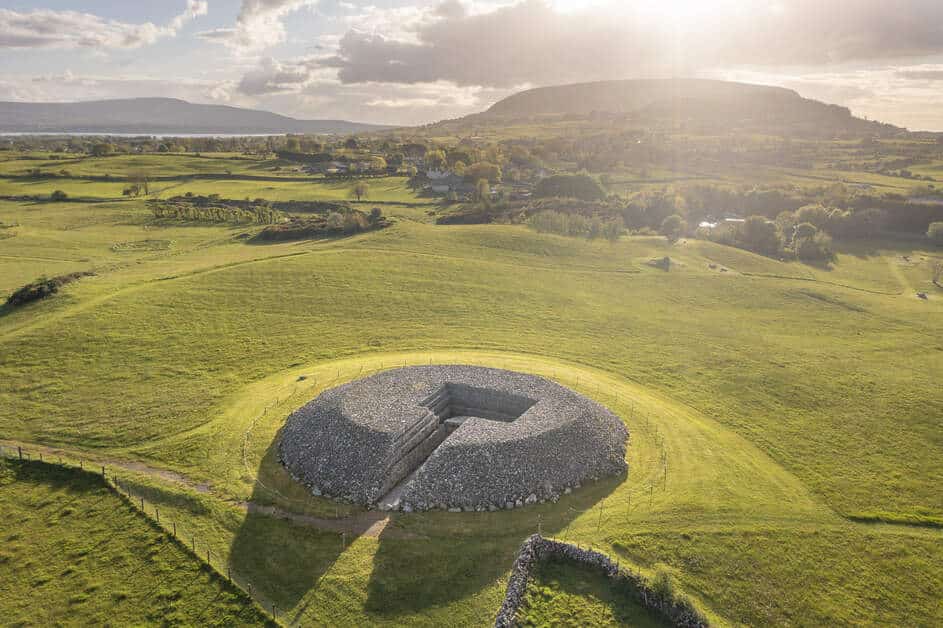
Unveiling Ireland's prehistoric mysteries is like opening a treasure chest filled with stories of resilience, ingenuity, and cultural richness.Let's take a stroll back to the Neolithic period, around 4000 BC, when Ireland's ancient peoples settled down, shifted from hunting to farming, and built small, stable communities.Fast forward to the Bronze Age, around 2500 BC.These folks were prolific builders, crafting thousands of megalithic tombs, stone circles, and hill-forts.Their unique jewellery, weaponry, and metallurgy give us a glimpse into their advanced skills and sophisticated society.The Neolithic, Bronze, and Iron Age peoples had fascinating belief systems.While much of it remains a mystery, we do know their monuments were often aligned with astrological events like summer and winter solstices.These alignments hint at their deep connection with the skies and seasons.Ireland's origins are shrouded in myth, but one captivating tale is from the Book of Invasions.Enter the Tuatha de Dannan, the Sidhe – mystical, fairy-like beings who supposedly inhabited Ireland before the Celts.They named the land after their goddess Ériu, which evolved into Éirinn and eventually – Eireann.Around 500 BC, the Celtic people, known as the Milesians, arrived.Whether through invasion or gradual assimilation, they left an indelible mark on Ireland, bringing with them a dominant culture and expert use of iron that proved invaluable in battle.Ireland's ancient peoples left behind awe-inspiring monuments that stand as a testament to their ingenuity and cultural prowess.From the Neolithic cairns and crannogs to the Bronze Age stone circles, these structures offer a profound connection to a distant, mysterious past.And as new discoveries continue to emerge, our understanding of Ireland's prehistoric heritage only deepens, revealing ever more about the lives of its ancient inhabitants.

Comments

Popular posts from this blog

Butterflies: Messengers of Irish Folklore

According to Irish folklore, butterflies are said to move between worlds and bring messages and warnings. They are said to be souls, waiting to be reborn on earth. This is perhaps why butterflies still play such a prominent role in material culture today, with a wide range of clothes, stationary, and other good coming decorated with butterflies. Butterflies with dark wings were said to warn of bad news such as an attack or failed crop, while white and yellow butterflies were told to bring good news such as a birth or success. In Irish mythology and folklore, butterflies have a special significance. According to Irish tradition, butterflies are believed to move between worlds and bring messages and warnings. They are considered to be souls waiting to be reborn on earth. This belief has contributed to the continued popularity of butterflies in modern-day material culture. Butterflies can be seen on a wide range of clothes, stationery, and other goods. Interestingly, the colour of the but...

Discovering Anamchara The Celtic Soul mate

  Anamchara Soul mate In the Celtic tradition, there is a beautiful understanding of love and friendship. One of the fascinating ideas here is the idea of soul-love; the old Gaelic term for this is anamchara. Anam is the Gaelic word for soul and chara is the word for friend.So anamchara in the Celtic world was the “soul friend.”With the anamchara you could share your inner-most self, your mind and your heart. This friendship was an act of recognition and belonging. When you had an anamchara, your friendship cut across all convention, morality, and category. You were joined in an ancient and eternal way with the “friend of your soul.”The Celtic understanding did not set limitations of space or time on the soul. There is no cage for the soul. The soul is a divine light that flows into you and into your Other. Learn More

Morrigan The Phantom Queen of War

  Harbinger of War The air crackles. A chill wind blows across the battlefield.Warriors grip their weapons, hearts pounding.Warriors grip their weapons, hearts pounding.She is the Celtic goddess of war and fate.Her presence hangs heavy, a promise of bloodshed and chaos.Morrigan is not a distant deity.She is a visceral presence on the battlefield.Her name alone evokes terror and awe.She is a force of nature, as unpredictable and unstoppable as a storm.She is worshipped and feared, revered and reviled.Morrigan is a complex figure in Celtic mythology.She is not simply a goddess of war, but of fate itself.She is a weaver of destiny, and her presence heralds momentous events.She is a reminder that life and death are intertwined, and that even the greatest heroes are subject to the whims of fate. Shapeshifter on the Battlefield Morrigan is a powerful shapeshifter.She can take on any form she chooses.One moment she might be a beautiful woman, the next a fearsome raven.She often appears as...